
Water damage behind shower wall is one of the most common yet overlooked problems homeowners face. Because the damage develops behind tile or drywall, it often goes unnoticed until expensive repairs become necessary. A small leak hidden inside the wall can gradually lead to mold growth, structural damage, and weakened building materials if left untreated.
Knowing what causes water damage behind a shower wall and recognizing the warning signs early can help you protect your bathroom and avoid costly renovations.
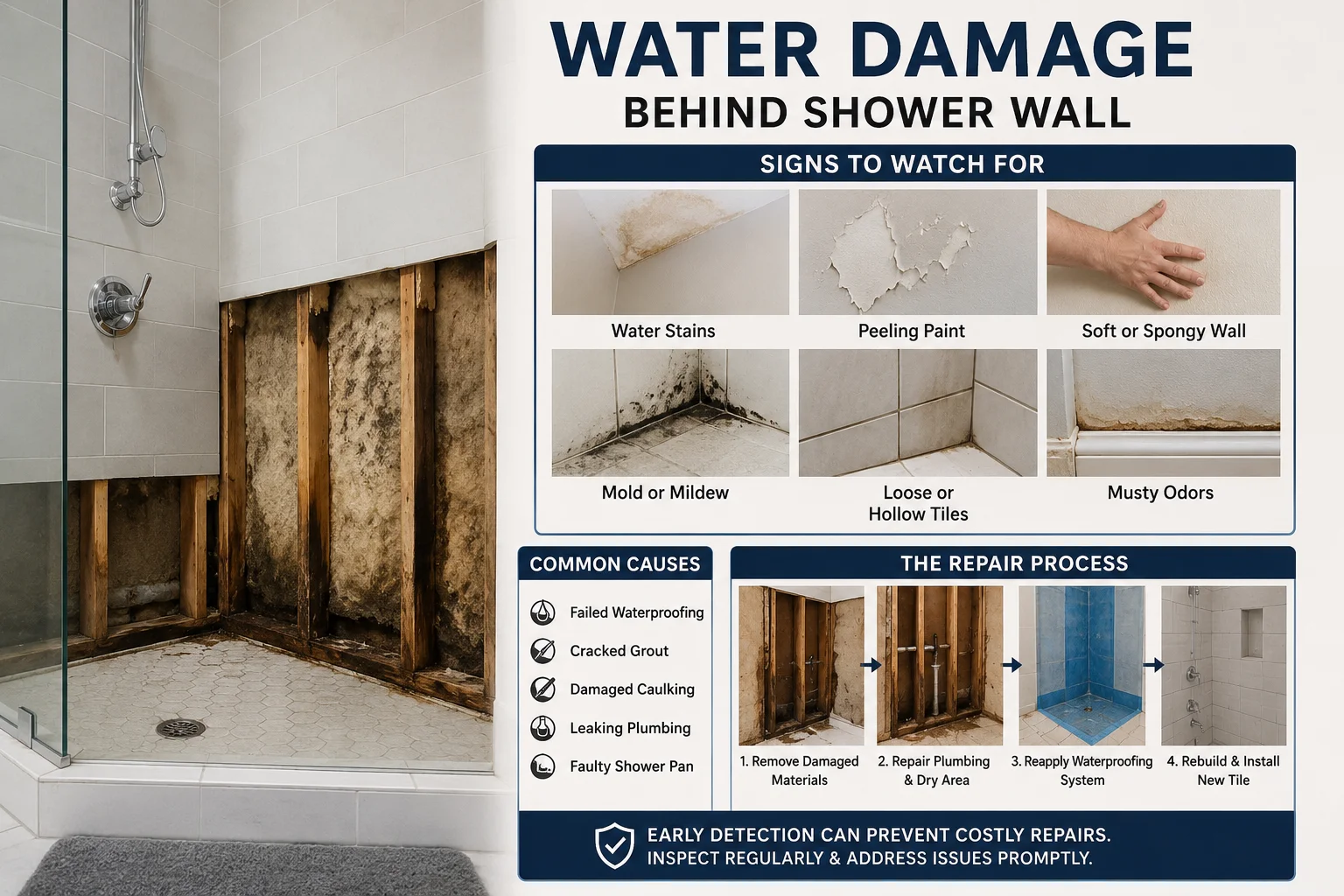
What Causes Water Damage Behind a Shower Wall?
Several issues can allow moisture to penetrate behind shower walls.
Common causes include:
- Failed waterproofing membrane
- Cracked grout lines
- Damaged or missing caulk
- Leaking shower plumbing
- Faulty shower pan
- Loose or cracked tile
- Poor shower installation
Even a slow leak can allow moisture to build up over time, creating the perfect environment for mold and mildew.
Signs of Water Damage Behind a Shower Wall
Since the damage is often hidden, homeowners should watch for subtle warning signs.
Musty Odors
A persistent musty smell in the bathroom is often one of the first indicators of trapped moisture. Mold and mildew thrive in damp, enclosed spaces behind tile and drywall.
Peeling Paint or Bubbling Walls
If paint near the shower begins peeling, bubbling, or cracking, moisture may already be affecting the drywall behind the finished surface.
Soft or Spongy Drywall
Drywall should always feel firm. If the wall feels soft when pressed, water has likely penetrated the material and compromised its strength.
Water Stains
Brown or yellow stains on nearby walls or ceilings often indicate an active leak behind the shower.
Loose or Hollow Tiles
Tiles that sound hollow when tapped or begin separating from the wall may signal that moisture has weakened the tile adhesive or substrate.
Mold Around Caulk or Grout
Mold that repeatedly returns after cleaning often points to a hidden moisture problem rather than a simple surface issue.
Why Water Damage Gets Worse Over Time
Water damage rarely fixes itself. As moisture continues entering the wall, it can lead to:
- Mold growth
- Mildew buildup
- Rotting wood framing
- Damaged insulation
- Deteriorated drywall
- Loose tile installation
- Structural damage
Early repairs are usually much less expensive than rebuilding an entire shower.
How Professionals Diagnose Hidden Water Damage
Bathroom remodeling and restoration professionals use several methods to locate hidden moisture.
These may include:
- Moisture meters
- Thermal imaging cameras
- Visual inspections
- Plumbing pressure tests
- Shower flood testing
These tools help identify leaks without unnecessary demolition.
Repairing Water Damage Behind a Shower Wall
The repair process depends on how extensive the damage is.
Minor issues may only require:
- Replacing damaged caulk
- Repairing grout
- Resealing tile
More serious problems often involve:
- Removing damaged drywall
- Replacing cement board
- Installing a new waterproofing membrane
- Repairing plumbing leaks
- Rebuilding portions of the shower
Proper waterproofing is essential before installing new tile.
How to Prevent Future Water Damage
Routine maintenance can significantly reduce the risk of hidden moisture problems.
Helpful prevention tips include:
- Inspect caulk every year.
- Repair cracked grout immediately.
- Fix plumbing leaks as soon as they’re discovered.
- Ensure proper bathroom ventilation.
- Keep shower doors and seals in good condition.
- Use professional waterproofing systems during remodeling.
Preventive maintenance is far less expensive than repairing major water damage.
When to Call a Professional
If you notice recurring mold, soft walls, persistent odors, or visible water stains, it’s best to have the shower inspected promptly.
A professional can determine whether the problem is limited to the surface or if moisture has spread behind the wall.
Early intervention often prevents structural damage and reduces repair costs.
Final Thoughts
Water damage behind a shower wall often starts as a small leak but can quickly become a major issue if ignored. Hidden moisture can damage drywall, encourage mold growth, weaken framing, and compromise the entire shower system. By recognizing early warning signs and addressing problems quickly, homeowners can protect their investment and avoid expensive renovations. Regular inspections, proper waterproofing, and timely maintenance are the best defenses against hidden shower leaks.