
Old, cracked, or moldy caulk can make even a clean bathroom look neglected. Over time, moisture exposure causes bathroom caulk to deteriorate, leading to gaps that allow water to seep behind tile surfaces. Learning how to remove old caulk from a shower correctly is an important first step before applying a fresh waterproof seal.
The good news is that with the right tools and technique, you can remove silicone caulk without damaging your tile, grout lines, or shower walls.
Why Old Shower Caulk Should Be Replaced
Caulk plays an important role in protecting your shower from water damage. It creates a flexible shower seal between tiles, tubs, shower pans, and walls.
Signs it’s time to remove and replace caulk include:
- Cracked or peeling caulk
- Discoloration and staining
- Mold or mildew growth
- Gaps along shower joints
- Water leaking behind tile surfaces
- Loose or shrinking silicone caulk
Ignoring damaged caulk can allow moisture to penetrate behind the tile, potentially causing mold behind caulk and expensive repairs.
Tools You’ll Need
Before starting, gather the following supplies:
- Utility knife
- Razor scraper
- Caulk remover tool
- Caulk softener
- Plastic scraper
- Cleaning cloths
- Rubbing alcohol
- Mild cleaner
- Gloves
- Safety glasses
Popular products such as Goo Gone Caulk Remover, DuPont caulk removal products, and Phenoseal caulk removers can help soften stubborn silicone residue and make removal easier.
Step 1: Soften the Existing Caulk
Removing old silicone caulk becomes much easier when it has been softened first.
Apply a caulk softener according to the manufacturer’s instructions. Allow it to sit for the recommended amount of time so it can break down the bond between the caulk and the tile surface.
For heavily aged or hardened bathroom caulk, you may need multiple applications.
Step 2: Cut Along Both Edges
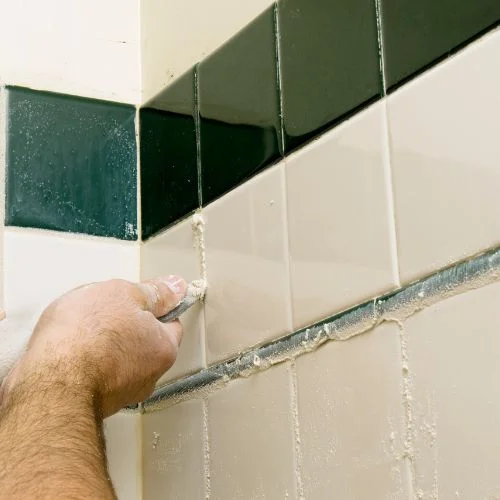
Using a sharp utility knife, carefully score along both sides of the caulk bead.
Work slowly and keep the blade parallel to the tile surface. The goal is to separate the caulk from the tile without scratching the finish or damaging nearby grout lines.
Avoid forcing the blade too deep into the joint.
Step 3: Remove the Main Caulk Bead
Once the edges are cut, use a caulk remover tool or plastic scraper to lift and pull away the old caulk.
In many cases, the caulk will peel off in long strips.
If portions remain stuck, continue loosening them with the scraper while being careful around the tile and grout.
For stubborn areas, a razor scraper can be used carefully to remove remaining material.
Step 4: Remove Silicone Residue
After the main bead is removed, a thin layer of silicone residue often remains on the tile surface.
This residue can prevent new caulk from adhering properly.
Use:
- A caulk remover product
- Rubbing alcohol
- A non-abrasive scrub pad
Gently clean the area until all residue has been removed.
The surface should feel smooth and free of any remaining caulk before proceeding.
Step 5: Inspect for Mold or Mildew
With the old caulk removed, inspect the area carefully.
Look for:
- Mold behind caulk
- Mildew buildup
- Water staining
- Soft drywall
- Damaged grout
If you discover mold or mildew, clean and disinfect the area thoroughly before recaulking the shower.
Addressing hidden moisture issues now can prevent larger problems later.
Step 6: Clean the Tile and Grout
Before applying new caulk, clean the entire work area.
Pay close attention to:
- Tile surfaces
- Corners
- Shower joints
- Grout lines
Cleaning tile grout and removing dust, soap scum, and debris helps ensure proper adhesion of the new caulk.
Allow the area to dry completely before moving forward.
Step 7: Apply New Caulk
Once the shower is clean and dry, you can begin recaulking the shower.
For most showers, 100% silicone caulk is recommended because it provides:
- Excellent waterproofing
- Flexibility
- Mold resistance
- Long-lasting performance
Apply a smooth, consistent bead along the joint and tool it immediately for a professional finish.
Allow the caulk to cure according to the manufacturer’s instructions before using the shower.
Tips to Avoid Damaging Tile
When removing old caulk, keep these best practices in mind:
- Use sharp blades rather than forcing dull ones
- Work slowly around corners
- Avoid metal tools on delicate tile finishes
- Protect grout lines from excessive scraping
- Test cleaning products in a small area first
- Never use excessive force with a razor scraper
Patience is often the key to protecting your tile while removing stubborn silicone caulk.
Common Mistakes to Avoid
Skipping Caulk Softener
Trying to remove hardened caulk without softening it first often increases the risk of tile damage.
Leaving Silicone Residue Behind
Even small amounts of residue can interfere with adhesion.
Recaulking Over Old Caulk
New caulk should never be applied over failing caulk.
Ignoring Mold Issues
Covering mold behind caulk without treating it first can lead to recurring problems.
Applying Caulk to Wet Surfaces
Moisture prevents proper bonding and can shorten the lifespan of the new seal.
Final Thoughts
Removing old caulk from a shower may seem intimidating, but the process is straightforward when done correctly. By using a utility knife, caulk remover tool, razor scraper, and appropriate cleaning products, you can safely remove deteriorated caulk without damaging your tile surface or grout.
Taking the time to properly clean the area, remove silicone residue, and inspect for mold or mildew will help ensure that your new shower seal lasts longer and provides reliable waterproofing. A carefully recalked shower not only looks cleaner but also helps protect your bathroom from moisture damage for years to come.